
If a slave died from being beaten, the owner was punished; if the slave recovered in a day or two, no punishment followed since the slave was considered property. This law aims to limit cruelty and hold masters accountable for fatal violence, reflecting concern for justice and human value even within an imperfect system. It regulated slavery as a societal reality, not a moral ideal, setting boundaries against abuse rather than endorsing servitude.
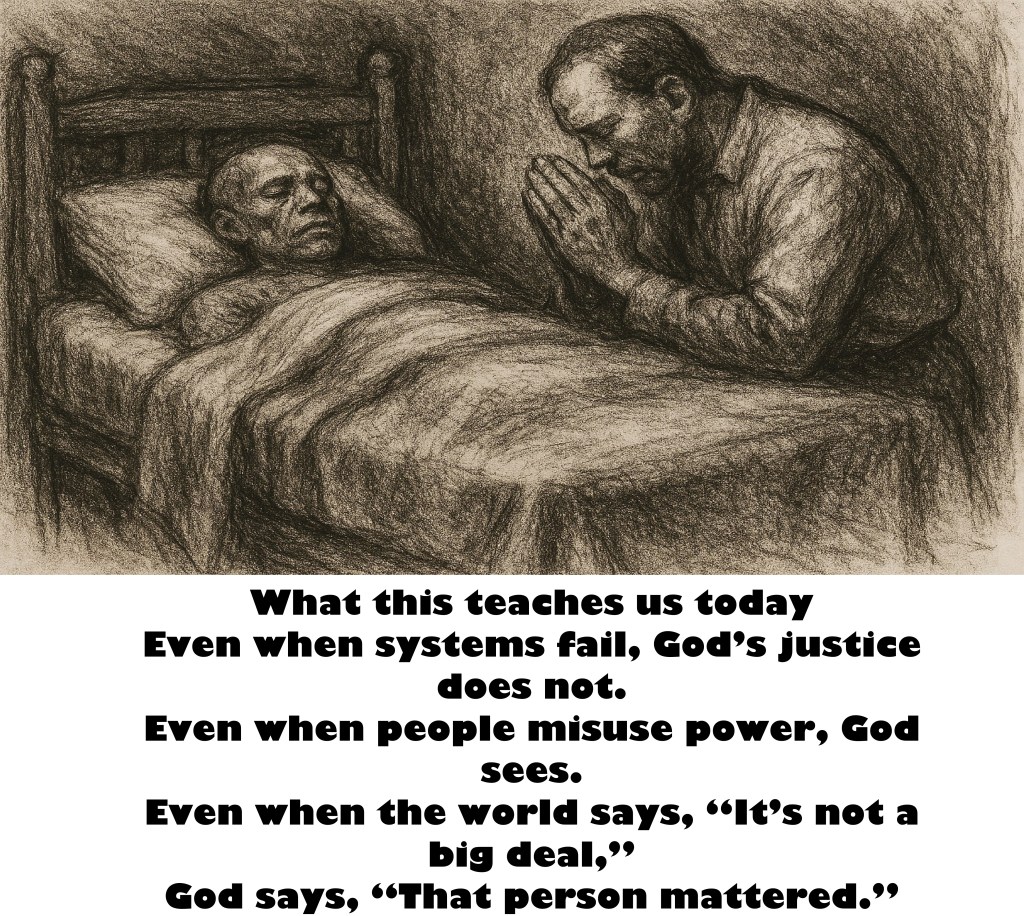
In Bible times, slavery was not based on race but typically resulted from poverty, debt, or war, affecting people of all skin tones. The laws in Exodus aimed to limit harm and protect vulnerable individuals, establishing boundaries and affirming the value of every life.
It reads in Exodus 21: 20–21 Easy: Perhaps a master may hit his male slave or his female slave with a stick. If the slave dies because of this, you must punish the master. But if the slave is still alive after one or two days, do not punish his master. The master has already lost the slave’s work for that time.
Father God, You see every wound and every hand that causes it. You are not blind to pain, nor silent in suffering. Teach us to honor life, even when the world forgets its worth. Help us walk with compassion, speak with courage, and act with care. Where systems fail, let Your justice rise. Where hearts grow hard, soften them with Your mercy. May we never excuse harm but always seek healing. In Your name, we remember the value of every soul. Love You, thank You, praise You and give You all the honor and glory in Jesus precious name Amen and Amen.
 Care To Plant