(Leviticus 14 21–32 ERV: A poor person might not be able to afford all these offerings. So that poor person canes one male lamb as a guilt offering. It will be presented to God so that the priest can make that person pure. The poor person must take 8 cups of fine flour mixed with oil. This flour will be used for a grain offering. The poor person must also take 2/3 of a pint of olive oil and two doves or two young pigeons. Even poor people can afford these things. One bird will be a sin offering, and the other will be a burnt offering. “On the eighth day, that person will bring these things to the priest at the entrance of the Meeting Tent. These things will be offered before the Lord so that the person can become clean. The priest will take the lamb for the guilt offering and the oil, and he will lift them up to show they were offered before the Lord. Then he will kill the lamb of the guilt offering, take some of its blood, and put it on the tip of the right ear of the person to be made clean. The priest will put some of this blood on the thumb of the right hand and on the big toe of the right foot of this person. He will also pour some of this oil into his own left palm. He will use the finger of his right hand to sprinkle some of the oil that is in his left palm seven times before the Lord. Then he will put some of the oil that is in his palm on the same places he put the blood from the guilt offering. He will put some of the oil on the tip of the right ear of the person to be made clean. The priest will put some of the oil on the thumb of the right hand and on the big toe of the person’s right foot. He will put the oil that is left in his palm on the head of the person to be made clean. In this way he will make that person pure before the Lord. “Then the priest must offer one of the doves or young pigeons. (He must offer whichever the person can afford. He must offer one of these birds as a sin offering and the other bird as a burnt offering. He must offer the birds with the grain offering. In this way the priest will make that person pure before the Lord, and that person will become clean.” These are the rules for making people clean after they become well from a skin disease. These are the rules for those who cannot afford the regular sacrifices for becoming clean.
These verses describe how God provides a way for the poor to be restored when they are ceremonially unclean: a single young sheep, a small measure of flour mixed with oil, a cup of olive oil, and two birds are offered; on the eighth day the priest applies blood and oil to the ear, thumb, and toe to signify cleansing and reintegration into the community. Reminding us that God’s holiness is paired with compassion. The ritual’s careful, humble provisions show that restoration is not only for the wealthy but for those with little, God values every person and provides means for healing and belonging. In our lives, cleansing and restoration often come through small, faithful acts: confession, seeking help, and receiving the care of others. Let this encourage you to trust that God notices the vulnerable and works through simple, loving practices to bring people back into wholeness.
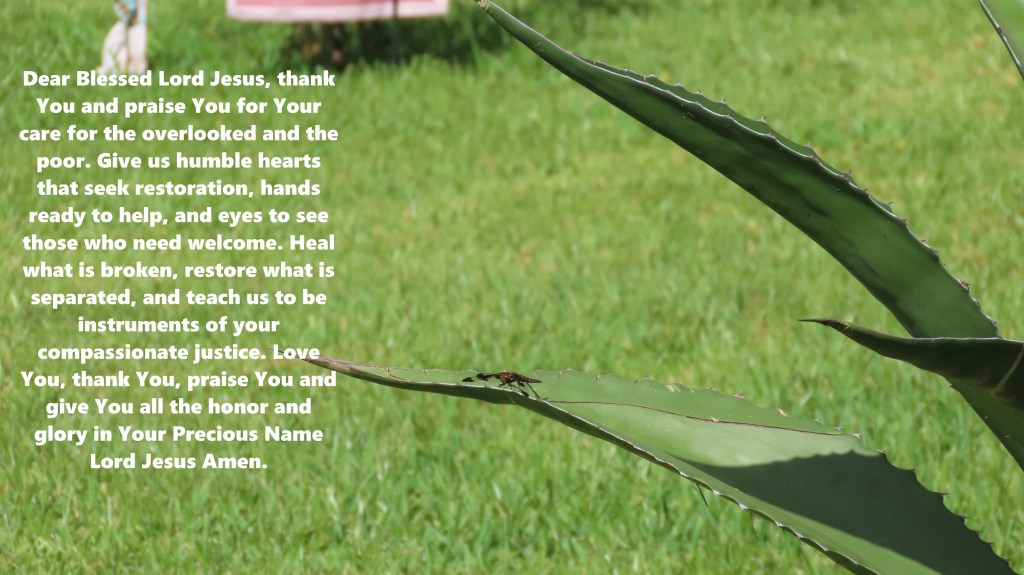
Dear Blessed Lord Jesus, thank You and praise You for Your care for the overlooked and the poor. Give us humble hearts that seek restoration, hands ready to help, and eyes to see those who need welcome. Heal what is broken, restore what is separated, and teach us to be instruments of your compassionate justice. Love You, thank You, praise You and give You all the honor and glory in Your Precious Name Lord Jesus Amen.