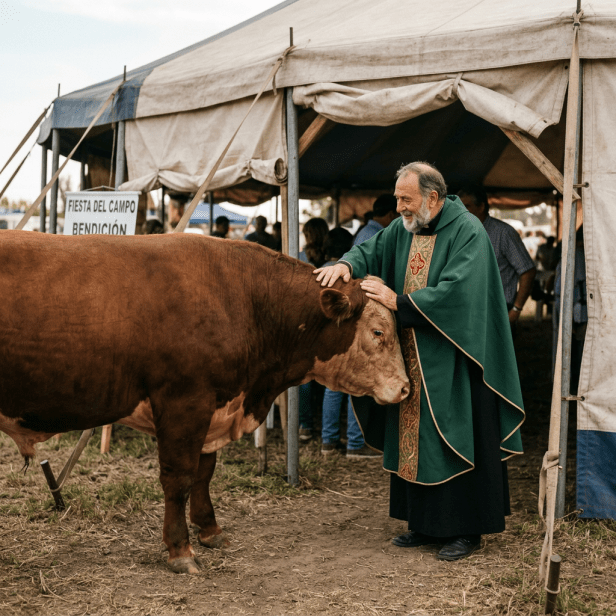
Leviticus 4:4–12 He shall bring the bull to the entrance of the tent of meeting before the Lord and lay his hand on the head of the bull and kill the bull before the Lord. And the anointed priest shall take some of the blood of the bull and bring it into the tent of meeting, and the priest shall dip his finger in the blood and sprinkle part of the blood seven times before the Lord in front of the veil of the sanctuary. And the priest shall put some of the blood on the horns of the altar of fragrant incense before the Lord that is in the tent of meeting, and all the rest of the blood of the bull he shall pour out at the base of the altar of burnt offering that is at the entrance of the tent of meeting. And all the fat of the bull of the sin offering he shall remove from it, the fat that covers the entrails and all the fat that is on the entrails and the two kidneys with the fat that is on them at the loins and the long lobe of the liver that he shall remove with the kidneys (just as these are taken from the ox of the sacrifice of the peace offerings); and the priest shall burn them on the altar of burnt offering. But the skin of the bull and all its flesh, with its head, its legs, its entrails, and its dung all the rest of the bull, he shall carry outside the camp to a clean place, to the ash heap, and shall burn it up on a fire of wood. On the ash heap it shall be burned up.
When the whole community sins unintentionally, it brings a bull, the elders lay hands on it, and the priest makes atonement. Sin impacts the entire body, so restoration also belongs to the community through shared responsibility and prayer. God of your people, heal the harm my choices have caused within my community. Think of one group or relationship you are part of, and take one small step toward healing.
What stands out to you about the priest’s role in this passage and why it matters for the community?
How does the ritual’s focus on cleansing and reentry speak to our need for restoration today?
In what ways do we treat sin as only a private matter rather than a communal concern?
How might the practice of confessing and being restored change the way we relate to one another in this group?
What modern “altars” or practices help us remember God’s provision for forgiveness and restoration?
When have you experienced a time of being restored to community after failure, and what helped that process?
What practical steps can our group take to make it safe for people to admit failure and receive help?
How does the imagery of laying hands on the offering shape your understanding of responsibility and identification with others?
Father God, You, call us to live before You with honesty and humility. We confess that we fall short and sometimes fail without meaning to; we ask for Your cleansing and renewal. As the priest brought the offering to restore access and relationship, bring Your restorative work to our hearts. Teach us to recognize our need for atonement, to turn from what separates us, and to receive Your forgiveness with gratitude. Give our leaders wisdom and our community gentleness as we walk together in repentance and grace. Make us a people who pursue holiness not out of fear but out of love for You and for one another. Love You, thank You, praise You and give You all the honor and glory in Jesus Precious Name Amen.