
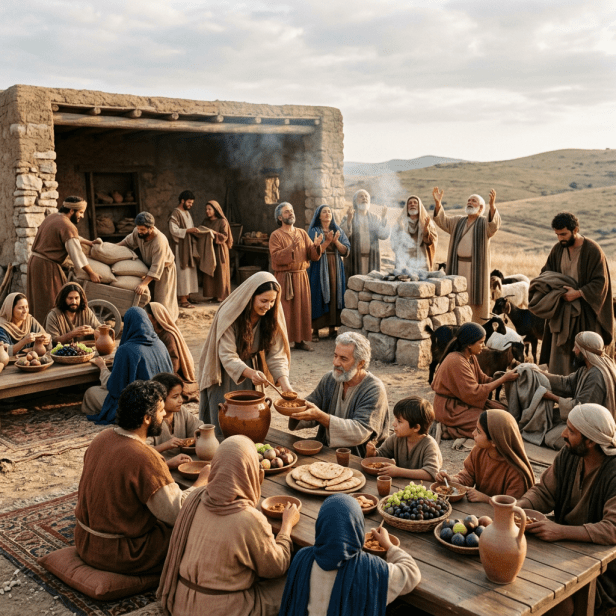
God’s worship in the Old Testament often links holiness with shared meals and careful stewardship. What is offered to God becomes holy and is entrusted to those who serve; at the same time, what remains is not to be treated casually. This teaches us that sacred things, our time, gifts, and acts of worship, require reverence and right use. When we receive God’s provision, we are invited both to celebrate it together and to honor its source by using it rightly and respectfully.
He will also get the skin from the burnt offering. Every grain offering belongs to the priest who offers it. That priest will get the grain offerings that were baked in an oven, or cooked on a frying pan, or in a baking dish. The grain offerings will belong to Aaron’s sons. It doesn’t make any difference if the grain offerings are dry or mixed with oil. The sons of Aaron will all share this food. Leviticus 7:8–10 Easy:
Questions I ask myself.
Who shares in the spiritual gifts and responsibilities around you?
How can you treat what is given by God with greater reverence and care this week?
Father God, teach me to treat what comes from You with reverence. Help me to share Your gifts with gratitude, to steward what You entrust to me wisely, and to honor You in how I use what is sacred. Make my heart attentive to Your holiness and my hands ready to serve. Love You, thank You, praise You and give You all the honor and glory in Jesus Precious Name Amen and Amen.

