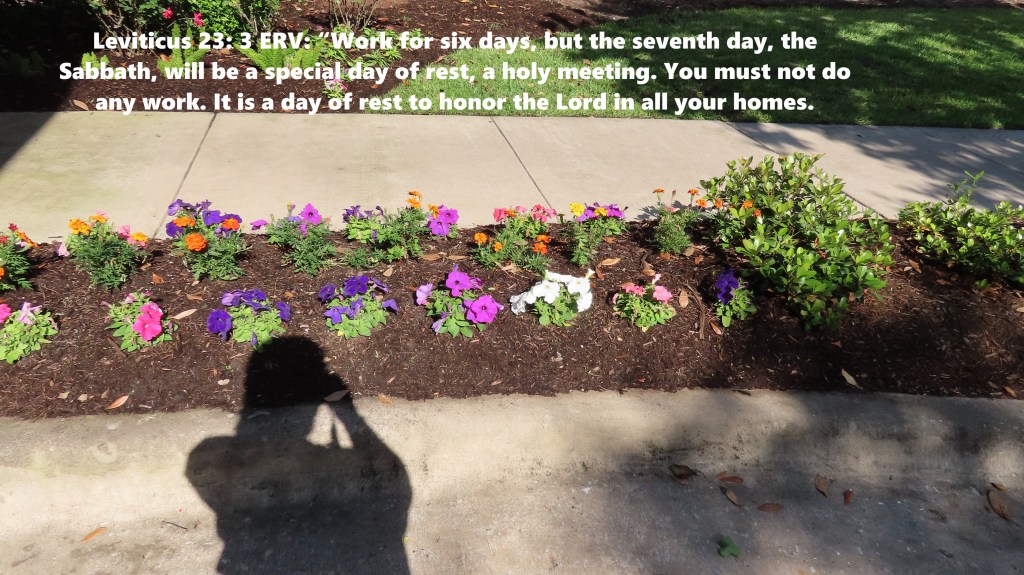
Leviticus 23: 3 ERV: “Work for six days, but the seventh day, the Sabbath, will be a special day of rest, a holy meeting. You must not do any work. It is a day of rest to honor the Lord in all your homes.
This verse reminds Israel that God’s design includes a weekly rhythm: six days of work and one day set apart as the Sabbath, a holy meeting for rest and honoring the Lord. Sabbath is not merely a pause from labor; it’s a sacred practice that reorients our hearts. By intentionally stopping work and gathering for worship or quiet reflection, we acknowledge God’s lordship, remember our dependence, and receive renewal for body and soul. Choose one simple Sabbath practice this week, put away screens for an hour, read Scripture slowly, share a meal with someone, or spend time in quiet prayer, and treat it as a holy appointment with God.
Dear Lord Jesus, thank You for the gift of Sabbath rest. Help me to set aside work and hurry so I can meet you with a quiet heart for one day a week. Teach me to honor this holy time, to receive Your renewal, and to live each week shaped by Your rest. Love You, thank You, praise You and give You all the honor and glory in Your Mighty Precious Name Lord Jesus Amen.
You can spend the whole day taking pictures of nature on the sabbath if it relaxes you. Hobbies you love to do is relaxation. People still cook on the sabbath. Still watch football. They probably had sports back then. But! Sports on the Sabbath in the Olden Days. In the Old Testament, the Sabbath (Saturday in Israelite tradition) was a day of rest and worship, with the Fourth Commandment forbidding work and “doing your own pleasure” on that day Ancient Israelites did not have a formal “sports” culture like modern athletics, but leisure and physical activity were part of daily life, often tied to religious festivals or agricultural cycles. The Bible itself uses athletic metaphors (Paul in 1 Corinthians 9:24–27), but there is no evidence of organized sports being banned in the early church by the early modern period, especially in 17th‑century England, the Puritan movement sought to make the Sabbath (Sunday) a day of strict religious observance. The English Parliament of 1584–1585 passed a bill banning markets, fairs, and certain recreations like bear‑baiting, hunting, hawking, and rowing barges during church service hours Queen Elizabeth, I vetoed it, but Puritan leaders like Nicholas Bownde argued for a Sabbath free from secular speech or acts, emphasizing solemnity and meditation. King James I later issued edicts in 1617 and 1618 banning many sports on the Sabbath, in line with Puritan ideals Under these “blue laws,” only limited, harmless activities like archery, dancing, and leaping/vaulting were permitted, while bowling, bear‑baiting, and other games were banned This reflected the belief that the Sabbath should be dedicated entirely to worship and moral rest. In Scotland and Geneva, some reformers allowed certain recreations after sermons, but this was not the norm in England or Puritan America in the U.S., Puritan “blue laws” also prohibited sports on Sundays, alongside other secular. At least now we can sit down and watch sports on the computer or Television or our phones. Yes, but spending time worshiping with God is priceless.