Leviticus 23:9-14 ERV: The Lord said to Moses, “Tell the Israelites: You will enter the land that I will give you and reap its harvest. At that time, you must bring in the first sheaf of your harvest to the priest. The priest will lift the sheaf to show it was offered before the Lord. Then you will be accepted. The priest will present the sheaf on Sunday morning. “On the day when you present the sheaf, you will offer a one-year-old male lamb. There must be nothing wrong with that lamb. That lamb will be a burnt offering to the Lord. You must also offer a grain offering of 16 cups of fine flour mixed with olive oil. You must also offer 1 quart of wine. The smell of that offering will please the Lord. You must not eat any of the new grain, or fruit, or bread made from the new grain until you bring that offering to your God. This law will always continue through your generations, wherever you live.
These verses direct the priest to wave the sheaf “on the day after the Sabbath” and then offer the required sacrifice the Feast of Unleavened Bread; the people are to count seven full weeks from that day to Pentecost (the Feast of Weeks).In ancient Israel the barley harvest ripened in early spring (roughly March–April), so the first fruits ceremony marked the start of the harvest season. That timing is why Jewish, and early Christian observances connect First fruits with Passover week and why New Testament writers associate Christ’s resurrection (first day of the week in that season) with the first fruits imagery. Connection to later texts in the New Testament writers link the timing and symbolism of the first fruits to Jesus’ resurrection (which occurred on the first day of the week), and Paul uses the first fruits image to describe Christ as the first to be raised. These references help explain how early Christians read the timing and meaning of the offering. Offering the first and best acknowledges God’s provision at the start of a season. Whether the sheaf was waved on a particular calendar day or understood more broadly, the heart of the practice is trust: we give God the first portion and then live in the rest of His provision.
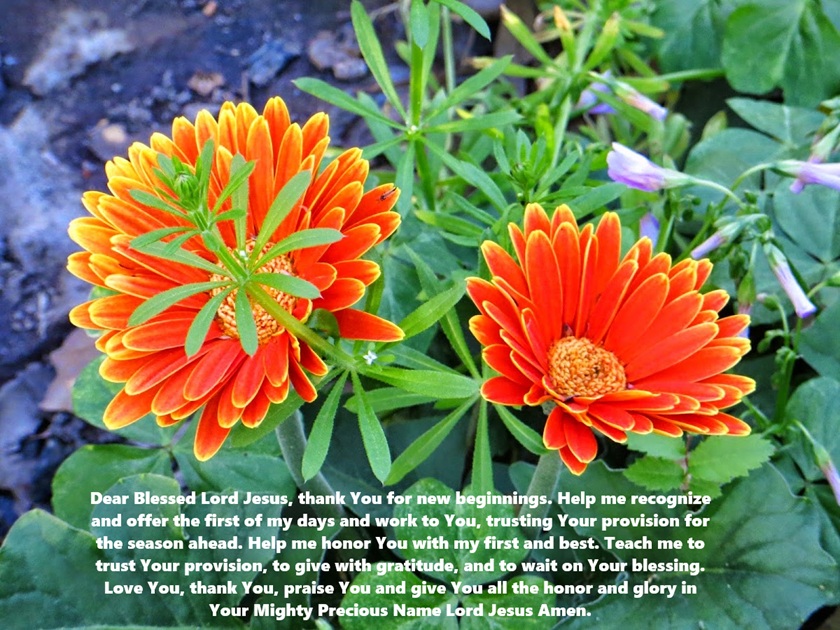
Dear Blessed Lord Jesus, thank You for new beginnings. Help me recognize and offer the first of my days and work to You, trusting Your provision for the season ahead. Help me honor You with my first and best. Teach me to trust Your provision, to give with gratitude, and to wait on Your blessing. Love You, thank You, praise You and give You all the honor and glory in Your Mighty Precious Name Lord Jesus Amen.