“You might promise to give an animal to the Lord. If it is a clean animal—one that is acceptable as an offering to the Lord—then the animal you bring will become holy. You must not put any other animal in its place. Don’t try to trade a good animal for a bad one or a bad animal for a good one. If you try to change animals, both animals will become holy—they will both belong to the Lord. “The animal you promised might be one that is not acceptable as an offering to the Lord. If you promised one of these unclean animals, you must bring it to the priest. The priest will decide a price for that animal. It doesn’t make any difference if the animal is good or bad. If the priest decides on a price, that is the price for the animal. If you want to buy back the animal, then you must add one-fifth to the price. Leviticus 27:9-13 ERV:
These verses lay out how vows and dedications to the Lord are to be handle, how people, animals, and property set apart for God are valued and, when needed, redeemed. The passage reminds us that what we promise matters: vows are serious, measured, and given a way back through redemption. Spiritually, it points to God’s holiness and order, but also to His mercy, there is provision for restoring what was vowed when circumstances change. For Christians, this law foreshadows the greater reality in Christ: our worth cannot be fully measured by human rules, and Jesus redeems what we dedicate to God, turning obligation into grace.
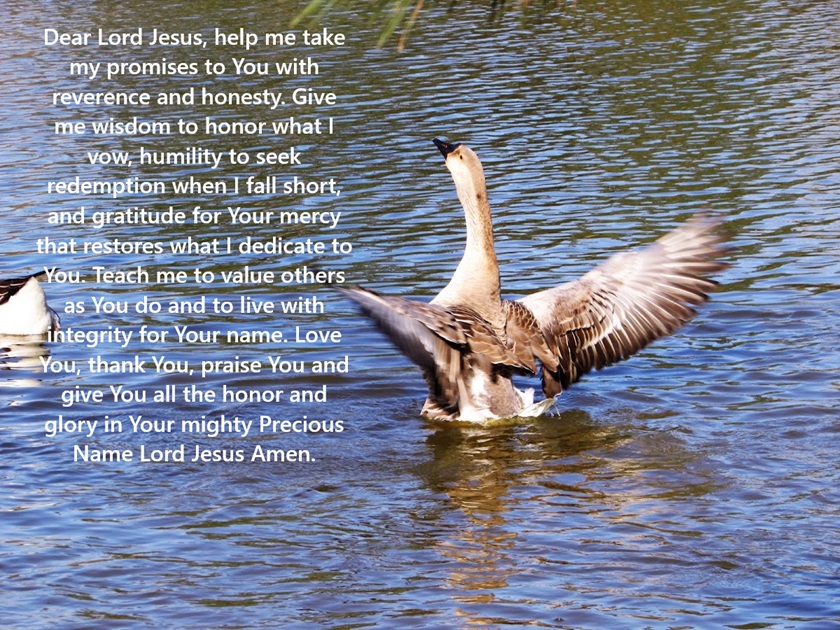
Dear Lord Jesus, help me take my promises to You with reverence and honesty. Give me wisdom to honor what I vow, humility to seek redemption when I fall short, and gratitude for Your mercy that restores what I dedicate to You. Teach me to value others as You do and to live with integrity for Your name. Love You, thank You, praise You and give You all the honor and glory in Your mighty Precious Name Lord Jesus Amen.