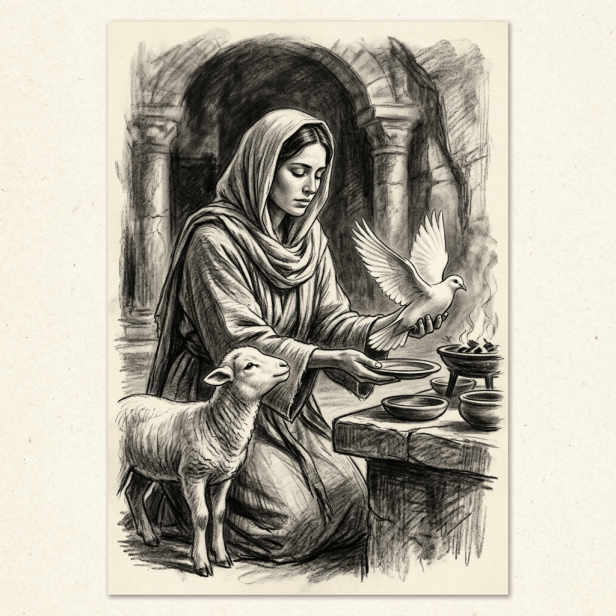
Provision allowing two birds instead of a lamb shows God’s compassion for those with limited means. Worship and restoration are made accessible to the poor, revealing that God’s covenant care includes practical mercy and inclusion. This chapter is not a judgment on motherhood but a ritual framework that highlights God’s holiness and the care given to life and blood in Israel’s worship system. The “uncleanness” described is ceremonial, not moral; it marks a temporary separation from the sanctuary until the prescribed rites restore the mother to public worship.
Leviticus 12:6–8 ERV: After the time of her purification is finished, the new mother of a baby girl or boy must bring special sacrifices to the Meeting Tent. She must give her sacrifices to the priest at the entrance of the Meeting Tent. She must bring a one-year-old lamb for a burnt offering and a dove or young pigeon for a sin offering. If the woman cannot afford a lamb, she may bring two doves or two young pigeons. One bird will be for a burnt offering and one for a sin offering. The priest will offer them before the Lord. In this way the priest will make her pure, and she will be clean from the blood of childbirth. These are the rules for a woman who gives birth to a baby boy or a baby girl.”
Holy Merciful Father, open our eyes to the needs around us and give us hearts that make worship and care accessible to everyone. Love You, thank You, praise You and give You all the honor and glory in Jesus Precious Name Amen.